Italian evenings rarely announce themselves. They accumulate: a bowl of olives, a glass of something bitter, a walk around the block that takes longer than planned, a table where someone finally sits down. None of it is complicated, and that is precisely the point. If your evenings tend to dissolve into scrolling and a vague sense that the good part of the day went missing, the Italian approach offers something more useful than a productivity system: a rhythm. Here is how to build one, starting small, without turning rest into another task to fail at.
What Makes an Italian Evening Work
The sequence does most of the work. An aperitivo marks the end of the working day. Dinner moves you into food and company. A short walk settles the meal. Something small afterwards — a coffee, a square of chocolate, twenty pages of a book — closes the door properly. Each step is brief. None of them requires ambition, equipment or a subscription.
Two things matter more than the individual rituals: repetition and edges. A routine needs clear starts and clear ends, not a long list of activities. Three evenings done properly will hold better than seven evenings of a plan you abandon by Thursday.
The other thing Italian evenings get right is that they are social by default but not dependent on company. A table set for one, a walk taken alone, a glass poured before anyone else is home — these still count. The ritual is the point, not the audience.
Start With the Aperitivo Pause
Aperitivo is not really a drink. It is a door between two parts of the day, and the drink is only the handle. Treat it that way and it becomes the easiest habit in this guide to install.
Keep the setup to three things
A bitter drink, something salty, and a surface that is not your desk. For the drink, a low-alcohol or non-alcoholic bitter works well: a soda with bitters, a chinotto, or sparkling water with a slice of orange and a dash of something bitter if you have it in the cupboard. On the plate, olives, taralli, a handful of nuts, a few chips, small crostini with something spread on them. Nothing that needs cooking, nothing that needs a recipe.
Give it twenty minutes and a fixed start
Choose a time — half past six, or whenever you close the laptop — and treat it as fixed as a meeting. Sit down, or stand at the kitchen counter, but do not carry the glass back to your desk. Leave the phone face down for the first ten minutes. If you drink alcohol, one is the number; the point is the pause, not the drink, and a second round turns the door into a corridor. If alcohol is a problem for you, skip it entirely — the ritual survives perfectly well on bitter soda. And if you have a health condition that affects what you eat or drink, follow your doctor's guidance over any general advice.
The common trap is turning aperitivo into dinner eaten standing up, which leaves you neither rested nor fed. Aperitivo is a comma, not a paragraph. Keep it small and let it end.
The Family Meal, Scaled Down
La cena is often imagined as a marathon of courses with three generations at the table. Most weeknights, in most Italian homes, it is not. It is a plate of pasta, bread, and somebody asking how the day went. That version you can manage on a Tuesday.
A table for one still counts
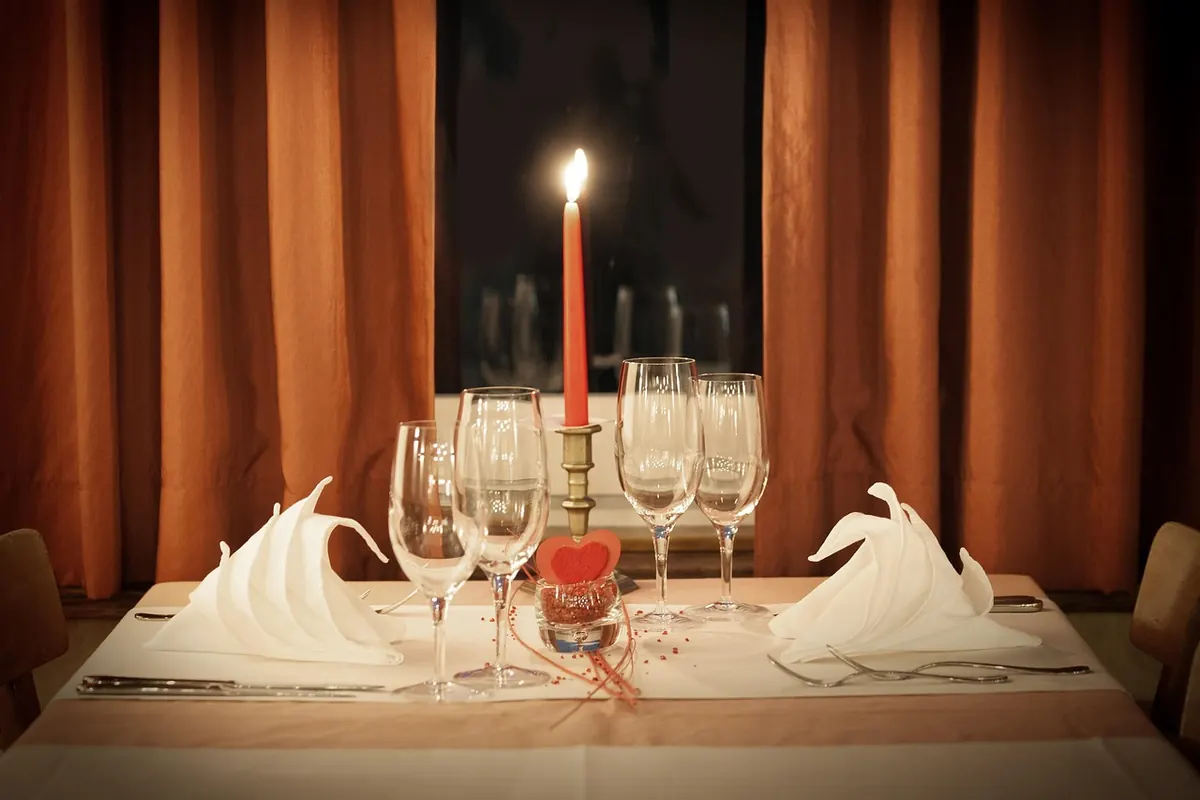
Set a place: a mat, a napkin, a glass for water. Sit down. Eat from a plate rather than from the pan, and put something on the table that isn't a screen. The food can be as plain as spaghetti with garlic and oil, a frittata with bread and tomatoes, or lentil soup with a good pour of olive oil on top. Twenty-five minutes of cooking is plenty; this is not a project.
If you live with other people
Agree on one screen-free meal a day, and defend it. Have a question ready that isn't logistics — what was the strangest thing that happened today, what are you reading, what do you want to eat on Sunday. Silence is allowed too. Not every dinner needs conversation; what matters is that everyone is sitting down at the same time.
The Evening Walk With No Destination
The passeggiata is a walk without a purpose. No route to log, no podcast to finish, no step count to check. In Italian towns it happens in the hour before dinner, when the heat drops and the streets fill with people who are not going anywhere in particular. You do not need a piazza. You need a loop of fifteen to twenty minutes around your own neighbourhood.
Make it repeatable before you make it interesting. Walk the same route for a week so it stops being a decision. Leave the headphones at home once or twice and walk at talking pace. Notice something different each time: the bakery pulling down its shutters, the tree that has started to turn, the new sign above the dry cleaner's. Greet the person walking the same loop as you. Small recognitions do more for an evening than a good playlist.
If walking is difficult or painful, a shorter version counts — ten slow minutes, or a few laps of a balcony or garden. For anything beyond mild discomfort, get proper advice rather than pushing through it.
Small Rituals That Hold the Evening Together
These are the details that stop a routine from collapsing on the first wet Wednesday. Pick two, not six.
- The lamp rule. When the working day ends, switch off the overhead light and turn on two lamps. The room changes, and so does your posture in it.
- The coffee cut-off. Coffee belongs after lunch, not after dinner, in the Italian order of things. If caffeine keeps you awake, move your last cup earlier and see what happens.
- The one-square finish. A square of dark chocolate, a small amaro, a herbal tea — something that signals the evening is closing rather than trailing off.
- Ten minutes of tidying. Counters cleared, dishes done before you sit down for the night. Waking up to a clean kitchen is a gift you give tomorrow's self.
- The book on the table. Leave it out, open, in the place where you sit. You will read more than you would with the book on a shelf.
- Five minutes of tomorrow. Clothes out, bag packed, one note about what matters most. Then stop planning.
A Four-Week Ramp
Adding everything at once is how routines die. Build it in stages and keep each stage for a week before you add the next.
- Week one: the aperitivo pause, three evenings. Same time, twenty minutes, phone down.
- Week two: keep the pause and add a seated dinner at the table, screens away, on the same three nights.
- Week three: add the walk before dinner on two of those nights. Fifteen minutes is enough.
- Week four: string them together on one night for the full sequence — pause, dinner, walk, something small. Leave the other nights light.
Expect to miss nights. A missed evening does not break the routine; abandoning it for two weeks does. If you come home late and exhausted, run the ten-minute version: olives, a glass of water, a lamp instead of the ceiling light. The shape stays, even when the size shrinks.
Start Tonight, Not Next Monday
Pick one ritual and do it this evening. The aperitivo pause is the easiest entry because it needs no cooking and no daylight: put something salty on a small plate, pour a bitter drink, set a timer for twenty minutes and sit down. Tomorrow, add the table. The night after, walk around the block before dinner. Within a fortnight you will have an evening with edges — a beginning, a middle and a proper end — which is more than most of us can currently claim, and it will have cost you a bowl of olives.
Photo: Sponchia / Pixabay