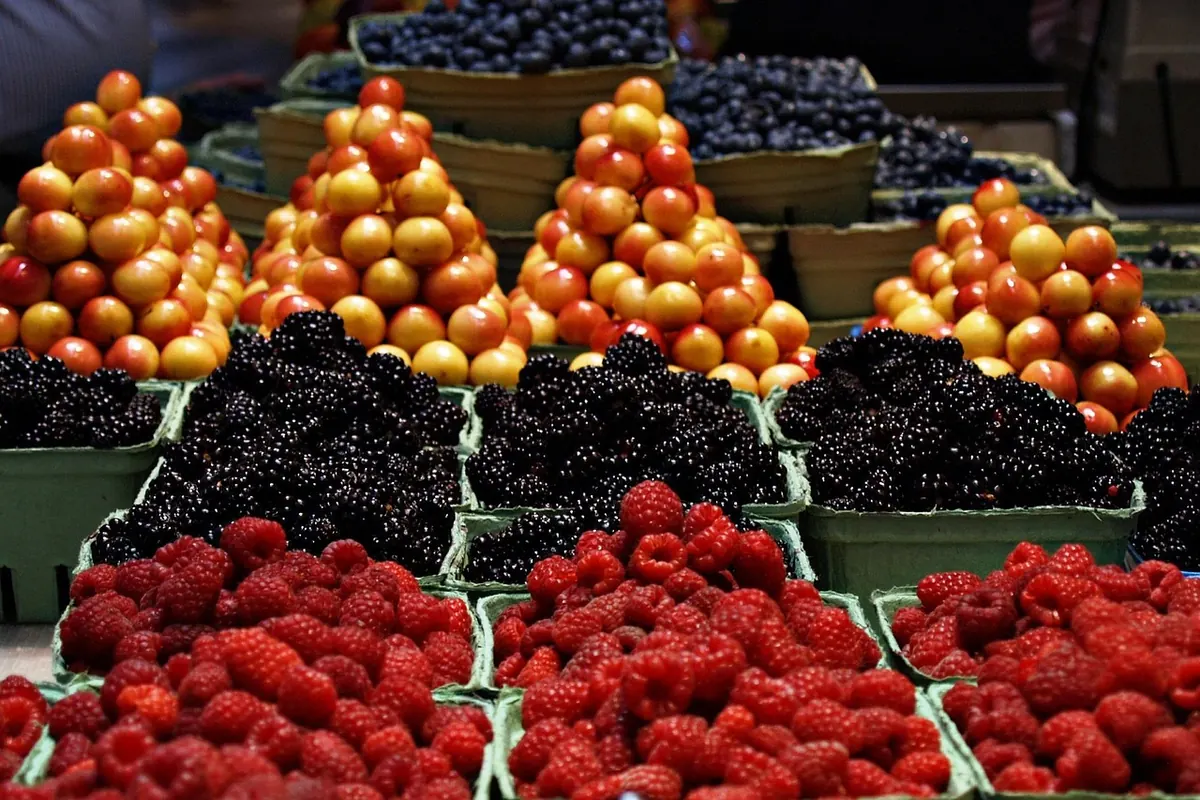
A neighborhood market is not a museum. Nobody is watching you, but everyone notices you. The vendor selling tomatoes knows which regular wants the soft ones for sauce; the fishmonger keeps the good flatfish for the customer who never asks the price. You can be an outsider and still be served like a neighbor. What separates the two is rarely language. It is timing, hands, money, and a handful of small courtesies performed in the right order. None of it requires fluency, and most of it can be learned in a single Saturday morning.
Time It Right, and Skip the Obvious Hour
Most visitors arrive at the wrong moment. They turn up at eleven, when the good produce has been picked over and the vendors are deep in conversation with people they have known for years. Or they arrive at ten minutes to closing and ask five complicated questions while the crates are being stacked.
Think in three windows. The opening hour is for selection: deliveries are out, everything is at its best, and the stallholder is too busy to chat. Prices are firm and nobody has time to explain how to cook a cardoon. If you know what you want, go early and be fast.
The middle of the morning is the golden window. The first rush has passed, the displays are still full, and the person behind the counter has a free minute. This is when you ask which melon is ready, whether the beans are stringless, or how long the cheese keeps.
The last hour is for bargains and improvisation. Perishables get discounted, boxes get filled generously, and a vendor may throw in an extra handful. But the selection is thin and patience is shorter, so do not turn up late with a long list and a debate about price.
Day of the week matters as much as hour. In many cities the main market day is followed by a quieter, thinner one, and the day after a big Saturday can feel like a different market entirely. Rain helps: a wet Tuesday thins the crowd, and the people who do show up get more attention.
Read the Stall Before You Join the Queue
Stand back for thirty seconds and look at three things. First, the queue: a line of people who already know what they want, holding a bag and a coin, is the best review a stall will ever get. A gorgeous display with nobody buying deserves a second, more suspicious look.
Second, the price cards. Handwritten in the local language, taped to a crate, with no English anywhere, tells you this is a working market rather than a staged one. That is good news, even if it feels intimidating.
Third, the mechanics. If the vendor weighs and bags everything themselves, you wait to be served. If there is a stack of bags, tongs, and a scale facing the customer, you serve yourself — but take the bag first, and never reach in while someone else is being served.
Etiquette: Hands, Turns, and the Unwritten Queue
Market order is real, even when it looks like chaos. Somewhere there is a ticket dispenser, a stack of numbers, or a line that exists purely in the memory of eight people. Find the end of it before you find the counter.
- Greet before you ask. A good morning, in whatever language, changes the temperature of the whole transaction.
- State the quantity, then the item. "Half a kilo of those, please" beats a vague gesture and a long sentence.
- Do not handle the produce unless invited. In much of southern Europe you point, and the vendor picks. Digging to the bottom of a crate is the fastest way to be treated as a nuisance.
- Keep your bag off the counter and your money where you can reach it without a search.
- Never open with a demand for a discount. Ask about the produce instead. A vendor who likes you may round down anyway; one who feels pressured will not.
- Say thank you, and say it clearly. Then step aside so the next person can order.
In a market, a queue is rarely just a line. It is an agreement. Find the end of it and you have already stopped looking like a visitor.
Cash, Change, and the Small-Bill Rule
Assume cash until told otherwise. Card acceptance varies by country, by city, and even by stall within the same market, so ask once — "Can I pay by card?" — and remember the answer for next time. The bigger practical problem is change. Early in the day, a vendor may genuinely not be able to break a large note, and handing one over for a small purchase marks you as someone who does not shop here.
Carry a fold of small notes and keep coins where you can find them without emptying your pockets onto the counter. If you are buying by weight, learn to think in kilos: a kilo is roughly 2.2 pounds, half a kilo is a little over a pound, and a quarter is a generous handful. Ask for an approximate weight rather than an exact one — "about half a kilo" is a normal request, not a fussy one.
Count your change in front of the vendor rather than walking away and checking later. It is not rude; it is how everyone does it. Tipping is not expected at a market stall, though rounding up a small amount is a friendly gesture and never an obligation. Payment habits differ from place to place, so treat every stall as its own small rulebook.
The Phrases That Do the Work
Grammar is optional. Numbers, quantities, and four or five set phrases will carry you through almost any market in Europe. Learn to count to twenty, learn the words for kilo, half, a little, and enough, and you have solved most of the problems that make visitors nervous.
- A greeting. Buongiorno, bonjour, buenos días — one word, said before anything else.
- I would like… Vorrei, je voudrais, quisiera. Softer than "I want", and always followed by a quantity.
- Half a kilo, please. Mezzo chilo, per favore. Un demi-kilo, s'il vous plaît. Medio kilo, por favor.
- How much is it? Quanto costa? C'est combien? ¿Cuánto cuesta?
- What do you recommend today? The single most useful question in the market, and the one that turns a transaction into a conversation.
- When should I eat it? Ask about ripeness and you will be handed the right piece instead of the prettiest one.
- That is all, thank you. Basta così, grazie. It closes the order cleanly and stops the bag from growing.
- See you next week. Say it as you leave. It costs nothing, and it is the phrase that makes you a regular.
Buy Like a Regular, Not a Collector
Buy for the next two or three days, not for a photograph. Market produce is often sold at its peak, which means it is also closer to the end of its life than the sealed version in a supermarket. Ask what is best today and let the answer change your dinner plans.
When the vendor selects for you, accept the choice. If something is clearly wrong — bruised, overripe, not what you asked for — say so politely and it will be swapped without drama. If a taste is offered, take one piece, not three. If you are making jam or sauce, ask whether there is a cheaper box of soft fruit; there usually is, and asking is normal rather than cheeky.
Bring your own bag, keep it open and ready, and keep the queue moving. And if you want a photo of the stall, ask first. A display is fair game; a person's face is not.
The Two-Minute Checklist Before You Walk In
Run through this at the edge of the market and you will move through it like someone who has been coming for years.
- Small notes and coins in an easy pocket, card as backup.
- Your own bag, open and ready.
- The greeting learned, plus the numbers one to twenty.
- Two or three things you actually need, and no fixed idea about the rest.
- One question prepared: what is good today?
- Enough time to wait your turn without sighing.
That is the whole secret, and it is not much of one. Markets reward attention rather than confidence. Watch where people stand, buy a little less than you planned, ask one honest question, and leave with a thank you. Do that twice in the same place and the third visit will feel different — not because you learned the language, but because someone behind the counter remembers your face and reaches for the better tomatoes.
Photo: ArtTower / Pixabay